Currently Empty: ₨ 0
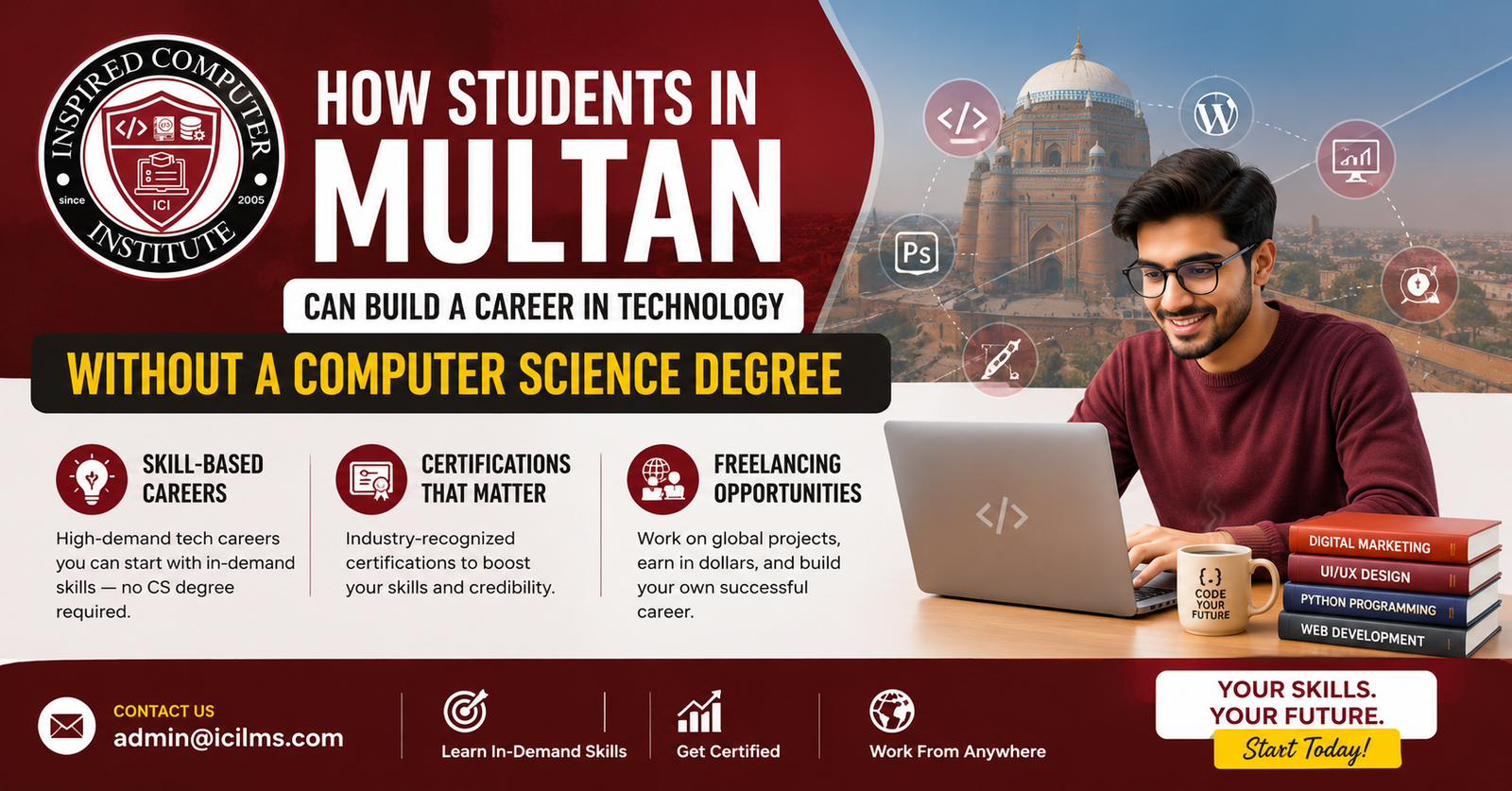
How Students in Multan Can Build a Career in Technology Without a Computer Science Degree
Komal Shahzadi
- June 29, 2026
- Comment 0
How Students in Multan Can Build a Career in Technology Without a Computer Science Degree
The technology industry has transformed dramatically over the past decade. Today, companies care less about where you studied and more about what you can actually build, solve, or deliver. This shift has opened countless opportunities for students from diverse academic backgrounds, including business, commerce, arts, engineering, medicine, and social sciences. If you’re a student in Multan, you no longer need a Computer Science (CS) degree to establish a successful career in technology.
Pakistan’s digital economy continues to expand, fueled by startups, software houses, remote work, and freelancing. According to the Pakistan Software Export Board (PSEB), the country’s IT exports have grown significantly in recent years, while the freelance market has also expanded rapidly. Multan itself has seen increasing interest in technology education through universities, private training institutes, online bootcamps, and digital communities.
The biggest advantage for today’s students is that high-quality education is available online. Platforms such as Coursera, Google Career Certificates, Microsoft Learn, freeCodeCamp, Meta Blueprint, Cisco Networking Academy, and LinkedIn Learning allow anyone with internet access to learn valuable technical skills. Employers increasingly evaluate practical projects, certifications, portfolios, and real-world experience rather than academic titles alone.
Whether your goal is to work at a software company, launch a startup, become a freelancer, or secure a remote international job, skill-based learning offers multiple pathways. The journey requires consistency, curiosity, and practical application—but it is accessible to anyone willing to invest the effort.
Why a Computer Science Degree Is No Longer the Only Path
For many years, earning a Computer Science degree was considered the standard route into the technology industry. That perception has changed significantly. Modern employers prioritize candidates who can demonstrate real skills through portfolios, GitHub repositories, freelance projects, certifications, and practical experience.
Large technology companies such as Google, IBM, Apple, Microsoft, and Meta have publicly emphasized skills-based hiring for many roles. Rather than relying exclusively on university degrees, recruiters increasingly evaluate candidates based on technical ability, communication, adaptability, and problem-solving.
In Pakistan, startups and software houses often hire junior developers, digital marketers, designers, and analysts based on completed projects and internship experience. Students from BBA, Commerce, English, Economics, Engineering, or even Medical backgrounds have successfully transitioned into technology careers by learning specialized skills independently.
For students in Multan, this creates tremendous opportunities. Online learning eliminates geographical barriers, allowing local students to compete for remote jobs worldwide. Building practical experience through personal projects, internships, hackathons, and freelancing often has a greater impact than academic specialization alone.
The Rise of Skill-Based Hiring
Skill-based hiring has become one of the most important trends in the global job market. Employers want professionals who can contribute from day one rather than simply holding academic credentials.
Instead of asking, “What degree do you have?” recruiters increasingly ask:
- Can you build a responsive website?
- Can you analyze data effectively?
- Can you create engaging digital marketing campaigns?
- Can you design intuitive user experiences?
- Can you solve cybersecurity problems?
These practical abilities are measurable through portfolios and certifications.
Students can demonstrate their expertise by:
- Building websites
- Designing mobile applications
- Running marketing campaigns
- Completing freelance projects
- Publishing GitHub repositories
- Earning industry-recognized certifications
This practical approach benefits self-motivated learners regardless of their academic background.
The Growing Tech Industry in Pakistan
Pakistan’s technology ecosystem continues expanding through software houses, startups, fintech companies, e-commerce businesses, healthcare technology, education technology, and international outsourcing firms.
Government initiatives supporting digital transformation, improved internet access, and increased remote work opportunities have further accelerated demand for skilled professionals.
Cities like Lahore, Islamabad, Karachi, Faisalabad, and Multan are witnessing growing numbers of IT training centers and startup communities. Many companies now hire remotely, enabling talented individuals from Multan to work for organizations across Pakistan or overseas.
Freelancing has become another major avenue for income generation. Pakistan consistently ranks among the world’s leading freelance markets on platforms such as Upwork and Fiverr, creating opportunities for students to earn while continuing their education.
Technology Careers That Don’t Require a Computer Science Degree
Web Development
Web developers build websites and web applications using technologies such as HTML, CSS, JavaScript, React, PHP, Node.js, and various frameworks. Beginners can start with front-end development before progressing to full-stack development.
Demand remains consistently high because nearly every business requires an online presence. Students can build portfolios by creating websites for local businesses, educational institutions, NGOs, or personal projects.
UI/UX Design
UI/UX designers focus on creating visually appealing and user-friendly digital experiences. Rather than writing extensive code, they research user behavior, design interfaces, create prototypes, and improve usability.
Popular tools include:
- Figma
- Adobe XD
- Sketch
- Canva
- Miro
Creative students from arts, business, or social sciences often excel in this field.
Digital Marketing
Digital marketing combines creativity with analytical thinking. Specialists help businesses grow through:
- Search Engine Optimization (SEO)
- Social Media Marketing
- Content Marketing
- Google Ads
- Email Marketing
- Analytics
Google Digital Garage, HubSpot Academy, and Meta Blueprint provide excellent free learning resources.
Data Analytics
Organizations generate enormous amounts of data that require interpretation for better decision-making.
Essential tools include:
- Microsoft Excel
- SQL
- Power BI
- Tableau
- Python
Students with mathematics, commerce, economics, or engineering backgrounds often transition successfully into data analytics.
Cybersecurity
Cybersecurity professionals protect organizations against cyber threats, data breaches, and malicious attacks.
Beginners can study:
- Network Security
- Ethical Hacking
- Risk Assessment
- Security Operations
- Linux Fundamentals
The demand for cybersecurity specialists continues growing globally.
Essential Skills Every Beginner Should Learn
Technical Skills
Regardless of your chosen specialization, several technical competencies create a strong foundation.
These include:
- Computer fundamentals
- Internet research
- Microsoft Office
- Cloud collaboration tools
- Basic programming
- Version control (Git)
- Artificial Intelligence tools
- Prompt engineering
Continuous learning remains essential because technology evolves rapidly.
Soft Skills
Technical expertise alone is insufficient. Employers consistently value:
- Communication
- Time management
- Critical thinking
- Problem-solving
- Team collaboration
- Adaptability
- Professionalism
- Client management
Freelancers especially benefit from excellent communication because client relationships directly influence long-term success.
Best Certifications for Students in Multan
Free Certifications
Students can begin their learning journey without spending money.
Recommended options include:
| Certification | Provider |
|---|---|
| Google Digital Garage | |
| Microsoft Learn | Microsoft |
| freeCodeCamp | freeCodeCamp |
| HubSpot Academy | HubSpot |
| Cisco Networking Academy | Cisco |
These certifications strengthen resumes while providing practical knowledge.
Paid Industry Certifications
As skills improve, industry-recognized certifications enhance credibility.
Popular options include:
| Certification | Best For |
|---|---|
| Google Data Analytics | Data Analysis |
| Google UX Design | UI/UX |
| Meta Front-End Developer | Web Development |
| AWS Cloud Practitioner | Cloud Computing |
| CompTIA Security+ | Cybersecurity |
These certifications are respected internationally and support career growth.
Freelancing Opportunities for Students
Freelancing offers flexibility, income, and valuable experience before graduation.
Popular platforms include:
- Upwork
- Fiverr
- Freelancer
- Toptal
- PeoplePerHour
Students can offer services such as:
- Website development
- Graphic design
- SEO
- Content writing
- Video editing
- Virtual assistance
- Data analysis
- WordPress development
Even small projects contribute valuable portfolio experience.
Building a Strong Portfolio
A portfolio often matters more than a resume.
Students should showcase:
- Personal projects
- Internship work
- Client testimonials
- GitHub repositories
- Design case studies
- Marketing campaigns
- Analytics dashboards
Creating a professional LinkedIn profile and personal website also improves visibility to recruiters.
A Step-by-Step Career Roadmap
First 90 Days
The first three months should focus on building fundamentals.
Suggested plan:
- Choose one technology specialization.
- Complete one structured online course.
- Practice daily.
- Build two personal projects.
- Create LinkedIn and GitHub profiles.
- Join technology communities in Pakistan.
Consistency matters more than speed.
Six-Month Growth Plan
Between months four and six:
- Complete advanced certifications.
- Build five portfolio projects.
- Apply for internships.
- Start freelancing.
- Participate in hackathons.
- Network with professionals.
- Improve communication skills.
- Continue learning emerging technologies.
By the end of six months, students can possess a competitive portfolio capable of attracting employers and freelance clients.
Common Mistakes to Avoid
Many beginners delay progress by making avoidable mistakes.
Common examples include:
- Learning too many technologies simultaneously.
- Ignoring practical projects.
- Waiting until graduation to gain experience.
- Neglecting English communication skills.
- Failing to build a LinkedIn presence.
- Copying projects instead of creating original work.
- Giving up after initial rejection.
Success in technology comes from continuous improvement rather than perfection.
Conclusion
Students in Multan no longer need a Computer Science degree to build a rewarding career in technology. The modern digital economy values practical skills, real-world experience, professional certifications, and problem-solving ability above traditional academic pathways. Fields such as web development, UI/UX design, digital marketing, data analytics, and cybersecurity provide accessible entry points for learners from virtually any educational background.
By combining structured online learning, recognized certifications, hands-on projects, and freelancing experience, students can develop competitive portfolios that attract employers both locally and internationally. Consistency, curiosity, and continuous learning remain the defining qualities of successful technology professionals. Starting today with one skill, one project, and one certification can create opportunities that extend far beyond Multan, opening doors to remote work, entrepreneurship, and global careers.
Frequently Asked Questions (FAQs)
1. Can I work in IT without a Computer Science degree?
Yes. Many technology roles prioritize practical skills, certifications, portfolios, and experience over formal academic qualifications.
2. Which technology career is best for beginners in Multan?
Web development, digital marketing, UI/UX design, and data analytics are excellent starting points due to their high demand and abundance of learning resources.
3. Which free certifications are most valuable?
Google Digital Garage, HubSpot Academy, Microsoft Learn, Cisco Networking Academy, and freeCodeCamp provide reputable free certifications.
4. Can students earn money while learning technology skills?
Yes. Freelancing platforms like Upwork and Fiverr enable students to earn income by offering services such as web development, design, SEO, content writing, and digital marketing.
5. How long does it take to become job-ready?
With consistent daily practice, many learners build employable skills within 6 to 12 months, depending on their chosen specialization and commitment.