Currently Empty: ₨ 0
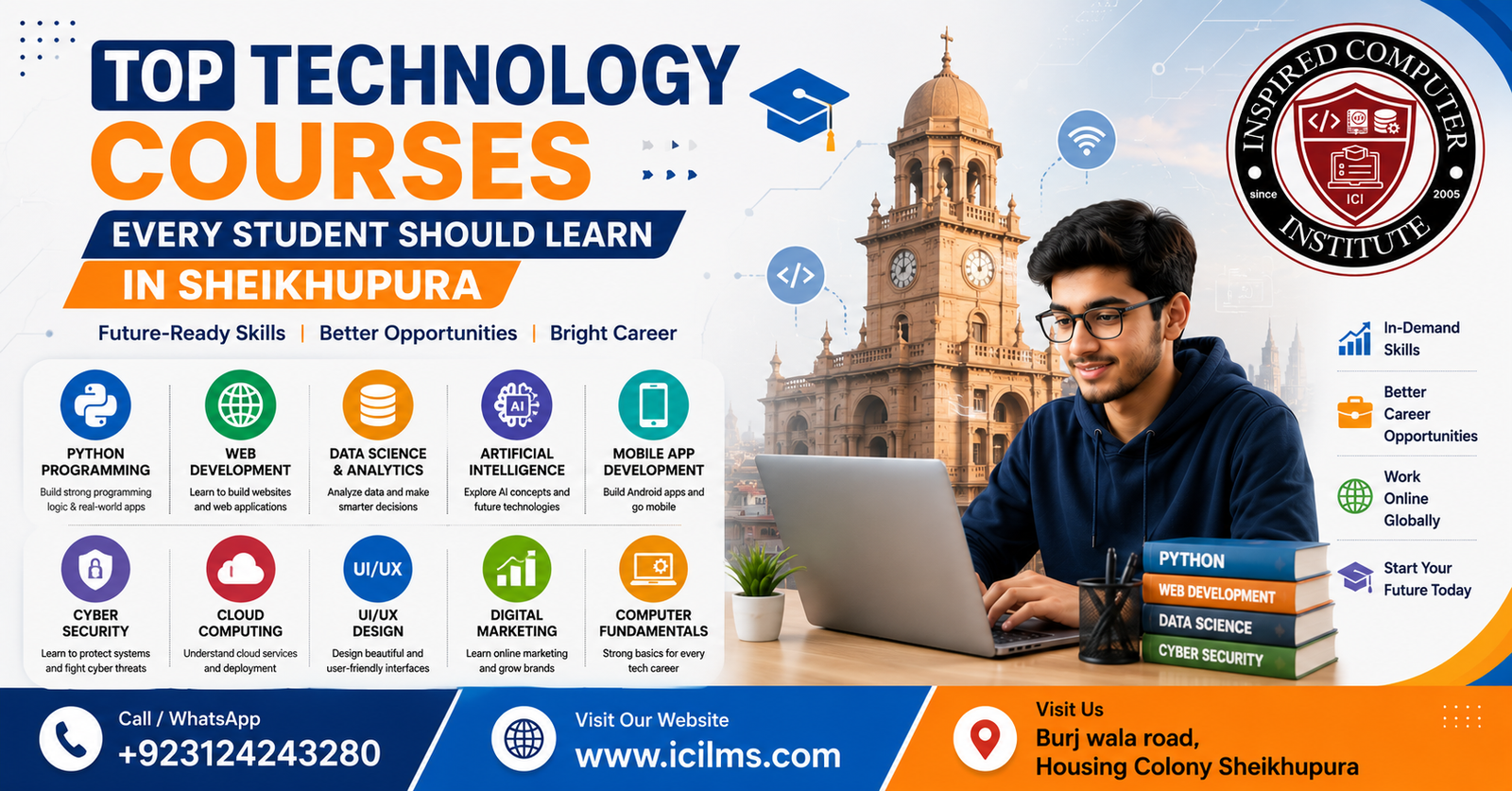
Top Technology Courses Every Student Should Learn in Sheikhupura
Komal Shahzadi
- June 15, 2026
- Comment 0
Top Technology Courses Every Student Should Learn in Sheikhupura
Why Technology Skills Matter for Students in Sheikhupura
The world is moving rapidly toward a digital future, and students in Sheikhupura have more opportunities than ever before to build successful careers through technology education. Traditional career paths are still important, but employers increasingly seek candidates who possess practical digital skills. Whether a student wants to work for a multinational company, launch a startup, secure remote employment, or earn through freelancing platforms, technology knowledge has become a valuable asset.
Sheikhupura, like many developing cities, is witnessing growing internet access, increased digital adoption among businesses, and expanding awareness of online career opportunities. Students no longer need to relocate to major cities to access global job markets. Through online platforms, remote work opportunities, and international clients, talented individuals can build rewarding careers directly from their hometown.
Technology courses provide more than technical knowledge. They help students develop analytical thinking, problem-solving abilities, creativity, communication skills, and adaptability. These competencies are highly valued across industries and can significantly improve employability. A student who invests time in learning AI, programming, cloud computing, web development, graphic design, office management, or digital marketing is preparing for industries expected to grow substantially over the coming decade.
Top Technology Courses Every Student Should Learn in Sheikhupura
The demand for digital professionals continues to rise as businesses automate operations, strengthen online presence, and embrace emerging technologies. Students who begin developing these skills early gain a competitive advantage that can benefit them throughout their professional journey.
The Growing Digital Economy and Career Opportunities
Technology is no longer limited to IT companies. Healthcare, education, manufacturing, retail, banking, logistics, and government organizations increasingly rely on digital systems. This widespread adoption creates opportunities for skilled professionals across multiple sectors.
According to reports from the World Economic Forum, technological transformation is expected to generate millions of new jobs globally over the next several years. While some traditional roles may evolve or disappear, demand for technology specialists continues to increase. Employers actively seek individuals who understand digital tools, automation systems, software development, data management, and online marketing strategies.
Students in Sheikhupura can benefit from this shift by choosing courses that align with future workforce demands. Technology careers often offer competitive salaries, flexibility, opportunities for international work, and continuous professional growth. Unlike many traditional professions that require extensive infrastructure investments, digital careers can often be pursued with a computer, internet connection, and relevant skills.
How Technology Is Reshaping Local and Global Jobs
Technology has transformed how businesses operate. Companies now use artificial intelligence for decision-making, cloud platforms for data storage, websites for customer engagement, graphic design for branding, and digital marketing for business growth. As a result, organizations require professionals who can manage these systems effectively.
Remote work has also changed employment dynamics. Businesses increasingly hire skilled workers regardless of geographical location. A student in Sheikhupura can collaborate with clients in Dubai, London, Toronto, or Sydney without leaving home. This global accessibility makes technology education one of the most practical investments for modern students.
Artificial Intelligence (AI)
Artificial Intelligence has emerged as one of the most influential technologies of the modern era. From recommendation systems and chatbots to healthcare diagnostics and autonomous vehicles, AI is transforming industries worldwide. Students who learn AI gain exposure to machine learning, data analysis, automation, and intelligent systems that drive innovation.
The rapid adoption of AI tools by businesses has created a significant demand for professionals capable of building, managing, and improving AI solutions. Organizations seek individuals who understand how algorithms work and how AI can improve productivity, efficiency, and customer experiences.
Learning AI also develops critical thinking and problem-solving capabilities. Students gain experience working with data, identifying patterns, and creating predictive models. These skills remain valuable even beyond specialized AI careers because data-driven decision-making is becoming essential across industries.
As AI technology continues advancing, professionals with AI expertise are expected to remain among the most sought-after candidates in the global workforce.
Key Skills Students Learn in AI
Students studying AI typically learn machine learning fundamentals, data preprocessing, neural networks, natural language processing, computer vision, and AI model development. Popular tools include Python, TensorFlow, PyTorch, and various data science libraries.
Practical projects often involve creating recommendation engines, predictive analytics systems, chatbots, and image recognition applications. These hands-on experiences help students build portfolios that demonstrate their capabilities to potential employers.
Career Opportunities in Artificial Intelligence
AI-related careers include:
- AI Engineer
- Machine Learning Engineer
- Data Scientist
- AI Research Assistant
- Business Intelligence Analyst
- Computer Vision Engineer
- NLP Specialist
Many of these positions offer attractive salaries and strong long-term growth potential due to increasing adoption across industries.
Cloud Computing
Cloud computing has become the foundation of modern digital infrastructure. Companies rely on cloud platforms such as Amazon Web Services (AWS), Microsoft Azure, and Google Cloud to store data, run applications, and deliver services efficiently.
Students who learn cloud computing gain knowledge of virtual servers, cloud storage, networking, security, and infrastructure management. These skills are increasingly valuable because businesses continue migrating operations from traditional data centers to cloud environments.
Cloud technology enables organizations to scale quickly, reduce costs, improve security, and enhance operational flexibility. As a result, cloud professionals remain in high demand across industries worldwide.
Why Cloud Skills Are in High Demand
The expansion of digital services, remote work, e-commerce, and mobile applications has accelerated cloud adoption. Businesses require professionals capable of designing, maintaining, and securing cloud-based systems.
Cloud expertise also complements other technology disciplines such as AI, software development, cybersecurity, and data analytics. This versatility makes cloud computing an excellent career choice for students seeking future-proof skills.
Jobs Available in Cloud Computing
Popular cloud-related careers include:
- Cloud Engineer
- Cloud Architect
- DevOps Engineer
- Systems Administrator
- Cloud Security Specialist
- Infrastructure Engineer
These roles often provide strong earning potential and opportunities for international employment.
Programming and Software Development
Programming serves as the foundation for many technology careers. Software powers websites, mobile applications, business systems, games, and countless digital services used daily. Students who learn programming develop logical thinking skills and the ability to create solutions for real-world problems.
Programming languages such as Python, Java, JavaScript, C++, and C# remain highly valuable across industries. Understanding programming principles allows students to participate in software development projects, automation initiatives, and technological innovation.
Software developers play a crucial role in modern organizations by designing, building, testing, and maintaining applications that support business operations and customer experiences.
Popular Programming Languages to Learn
Several languages are particularly beneficial for beginners and professionals alike:
| Language | Common Uses | Demand Level |
|---|---|---|
| Python | AI, Data Science, Automation | Very High |
| JavaScript | Web Development | Very High |
| Java | Enterprise Applications | High |
| C++ | Software Engineering | High |
| C# | Game Development, Enterprise Software | High |
Each language offers unique opportunities and can serve as a gateway to specialized technology careers.
Career Growth in Software Development
Software development careers include:
- Software Developer
- Mobile App Developer
- Backend Developer
- Full-Stack Developer
- Software Tester
- Automation Engineer
The continuous demand for software solutions ensures strong career prospects for skilled programmers.
Web Development
Web development remains one of the most accessible and rewarding technology fields for students. Every business, organization, and personal brand requires an online presence, creating constant demand for web development professionals.
Students learn how websites are designed, developed, optimized, and maintained. Modern web development combines creativity with technical expertise, allowing individuals to build interactive digital experiences for users worldwide.
The field offers flexibility, entrepreneurial opportunities, and a relatively low barrier to entry compared to many traditional professions.
Front-End and Back-End Development Skills
Front-end development focuses on user interfaces using HTML, CSS, JavaScript, and modern frameworks. Back-end development involves server-side programming, databases, APIs, and application logic.
Students who master both areas become full-stack developers, a role highly valued by employers because of its versatility and broad skill set.
Freelancing and Employment Opportunities
Web developers can work in:
- Software companies
- Marketing agencies
- E-commerce businesses
- Startups
- Government organizations
- Freelance marketplaces
Many successful freelancers build sustainable careers by creating websites for local and international clients.
Graphic Design
Graphic design combines creativity, communication, and technology. Businesses rely on visual content to attract customers, strengthen branding, and communicate messages effectively.
Students studying graphic design learn typography, color theory, branding principles, visual storytelling, and digital illustration. These skills are essential for creating marketing materials, advertisements, social media graphics, and corporate branding assets.
The increasing popularity of social media and digital advertising has significantly expanded demand for skilled graphic designers.
Essential Design Tools and Skills
Popular tools include Adobe Photoshop, Adobe Illustrator, Adobe InDesign, Canva, and Figma. Students also learn layout design, branding strategies, user experience concepts, and content creation techniques.
Strong portfolios often play a critical role in securing employment and freelance opportunities.
Career Paths for Graphic Designers
Graphic designers may pursue careers as:
- Brand Designers
- UI/UX Designers
- Visual Content Creators
- Creative Directors
- Marketing Designers
- Freelance Designers
These opportunities continue growing as businesses invest more heavily in digital branding and online engagement.
Office Management and Productivity Software
Office management remains an essential skill area for students entering administrative, business, educational, and corporate environments. Knowledge of Microsoft Office applications such as Word, Excel, PowerPoint, Outlook, and Access can significantly improve employability.
Businesses depend on productivity software for communication, reporting, financial analysis, scheduling, and project coordination. Employees who can efficiently manage documents, spreadsheets, presentations, and data often become valuable organizational assets.
Excel skills, in particular, remain highly sought after because of their importance in data analysis, budgeting, forecasting, and reporting activities. Students who master office productivity tools gain practical capabilities applicable across virtually every industry.
Importance of Microsoft Office and Business Skills
Office management courses often include:
- Document creation
- Spreadsheet analysis
- Presentation development
- Email communication
- Data management
- Administrative procedures
These competencies support career success in both technical and non-technical roles.
Digital Marketing
Digital marketing has become one of the fastest-growing professional fields globally. Businesses increasingly allocate marketing budgets toward online channels because consumers spend significant time on search engines, social media platforms, websites, and mobile applications.
Students who learn digital marketing gain expertise in search engine optimization (SEO), social media marketing, content creation, email marketing, paid advertising, and analytics. These skills enable businesses to attract customers, generate leads, and increase revenue.
Digital marketing also offers exceptional entrepreneurial opportunities. Individuals can promote their own businesses, build personal brands, or provide marketing services to clients worldwide.
Core Digital Marketing Skills
Important digital marketing competencies include:
- SEO
- Social Media Marketing
- Google Ads
- Content Marketing
- Email Marketing
- Analytics and Reporting
- Conversion Optimization
These skills help organizations maximize online visibility and business growth.
Career and Business Opportunities in Digital Marketing
Digital marketing careers include:
- SEO Specialist
- Social Media Manager
- Content Strategist
- PPC Specialist
- Digital Marketing Manager
- Marketing Analyst
Demand continues increasing as organizations prioritize digital customer acquisition strategies.
Comparing the Best Technology Courses
| Course | Future Demand | Freelancing Potential | Job Opportunities |
|---|---|---|---|
| Artificial Intelligence | Excellent | Medium | Very High |
| Cloud Computing | Excellent | Medium | Very High |
| Programming | Excellent | High | Very High |
| Web Development | Very High | Very High | High |
| Graphic Design | High | Very High | High |
| Office Management | Moderate to High | Low | High |
| Digital Marketing | Very High | Very High | Very High |
Choosing the Right Technology Course for Your Future
Selecting the right technology course depends on personal interests, career goals, and learning preferences. Students who enjoy mathematics, analytics, and problem-solving may find AI or programming particularly appealing. Those interested in infrastructure and enterprise systems may benefit from cloud computing. Creative individuals often thrive in graphic design and web development, while students passionate about communication and business growth may prefer digital marketing.
The most successful professionals continuously update their knowledge because technology evolves rapidly. Students should focus not only on certifications but also on practical projects, portfolio development, internships, and real-world experience. Combining multiple skills can further enhance employability. For example, web development paired with digital marketing or AI combined with cloud computing creates highly competitive career profiles.
Employers increasingly value practical competence over theoretical knowledge alone. Students who actively build projects, participate in online communities, and pursue continuous learning position themselves for long-term success in the digital economy.
Conclusion
Technology education provides one of the strongest pathways to career growth for students in Sheikhupura. Fields such as Artificial Intelligence, Cloud Computing, Programming, Web Development, Graphic Design, Office Management, and Digital Marketing offer substantial opportunities in both local and international markets. As businesses continue embracing digital transformation, demand for skilled technology professionals is expected to grow significantly.
Students who begin learning these skills today can access diverse career paths, remote work opportunities, freelancing platforms, entrepreneurial ventures, and high-growth industries. Investing in technology education is not simply about securing a job—it is about preparing for a future where digital skills drive innovation, competitiveness, and professional success.
FAQs
1. Which technology course has the highest future demand in Sheikhupura?
Artificial Intelligence, Cloud Computing, Programming, and Digital Marketing currently show some of the strongest future demand globally and locally.
2. Can students start learning these courses after matriculation?
Yes. Many technology courses are beginner-friendly and can be started immediately after matriculation.
3. Which course is best for freelancing?
Web Development, Graphic Design, Programming, and Digital Marketing offer excellent freelancing opportunities.
4. Do students need advanced mathematics for all technology courses?
No. While AI and certain programming fields benefit from mathematical knowledge, Graphic Design, Web Development, Office Management, and Digital Marketing require less advanced mathematics.
5. Can technology skills help students work internationally?
Yes. Technology skills are globally recognized and can open opportunities for remote work, freelancing, and international employment.
6. Which technology course is best for beginners with no technical background?
Students with no technical background can start with Digital Marketing, Graphic Design, Web Development, or Office Management. These courses are relatively easy to begin and offer practical skills that can be applied immediately. As confidence grows, students can transition into more advanced fields such as Programming, Cloud Computing, or Artificial Intelligence.
7. How long does it take to learn a technology course?
The duration depends on the course and learning intensity. Basic skills can often be acquired within 2 to 6 months, while professional-level expertise may require 6 months to 2 years of consistent study and practice. Continuous learning is essential because technology evolves rapidly.
8. Which technology course offers the highest salary potential?
Artificial Intelligence, Cloud Computing, and Software Development generally offer some of the highest salaries worldwide. Professionals in these fields are highly valued because organizations rely heavily on advanced technology solutions to remain competitive.
9. Can students earn online while learning these skills?
Yes. Many students start earning through freelancing, internships, content creation, remote projects, and part-time jobs before completing their studies. Skills such as Graphic Design, Web Development, and Digital Marketing are especially suitable for early income generation.
10. Is freelancing a reliable career option for technology students?
Freelancing can be a highly rewarding career path when combined with strong technical skills, professionalism, and consistent client communication. Platforms such as Upwork, Fiverr, Freelancer, and PeoplePerHour provide opportunities to work with clients from around the world.
11. What equipment do students need to start learning technology skills?
Most courses require only:
- A laptop or desktop computer
- A stable internet connection
- Basic software tools related to the chosen field
- Access to online learning resources
Many beginner-friendly tools are available for free or at low cost.
12. Should students choose one course or learn multiple skills?
Starting with one core skill is usually the best approach. Once a strong foundation is established, combining complementary skills can create a significant advantage. For example:
- Programming + AI
- Web Development + Digital Marketing
- Graphic Design + Social Media Marketing
- Cloud Computing + Cybersecurity
These combinations increase employability and earning potential.
13. Are technology jobs available in Pakistan as well as abroad?
Yes. Pakistan’s IT sector continues to grow, creating opportunities in software houses, startups, e-commerce companies, banks, educational institutions, and government organizations. At the same time, remote work allows skilled professionals to serve international clients without relocating.
14. Which technology course is best for creative students?
Creative students often excel in:
- Graphic Design
- UI/UX Design
- Web Design
- Digital Marketing
- Content Creation
These fields combine artistic ability with technology, making them ideal for individuals who enjoy visual communication and innovation.
15. Is a university degree necessary to get a technology job?
While a degree can be helpful, many employers prioritize skills, certifications, portfolios, and practical experience. A strong portfolio showcasing real projects often carries significant weight during hiring decisions.
16. What certifications can improve job prospects?
Popular certifications include:
- AWS Certified Cloud Practitioner
- Microsoft Azure Fundamentals
- Google Digital Marketing Certification
- Meta Social Media Marketing Certification
- Google Analytics Certification
- Python Programming Certifications
- Adobe Certified Professional Credentials
These certifications help demonstrate expertise to employers and clients.
17. Which course is best for starting a business?
Digital Marketing, Web Development, Graphic Design, and AI can be particularly valuable for entrepreneurs. These skills help business owners create websites, attract customers, build brands, automate processes, and grow revenue efficiently.
18. Can female students build successful careers in technology?
Absolutely. Technology offers equal opportunities for everyone. Female professionals are excelling as software developers, AI engineers, cloud architects, digital marketers, designers, and technology entrepreneurs around the world. Remote work options also provide additional flexibility.
19. What is the future of AI and automation in the job market?
AI and automation will continue transforming industries, but they are expected to create new career opportunities alongside changing existing roles. Professionals who understand AI tools and can work alongside emerging technologies will have a strong advantage in the future workforce.
20. What is the most future-proof technology skill to learn today?
No single skill guarantees future success, but Artificial Intelligence, Cloud Computing, Programming, and Digital Marketing are among the most resilient and fast-growing fields. Students who combine technical expertise with communication, creativity, and adaptability will be best positioned for long-term career success.