Currently Empty: ₨ 0
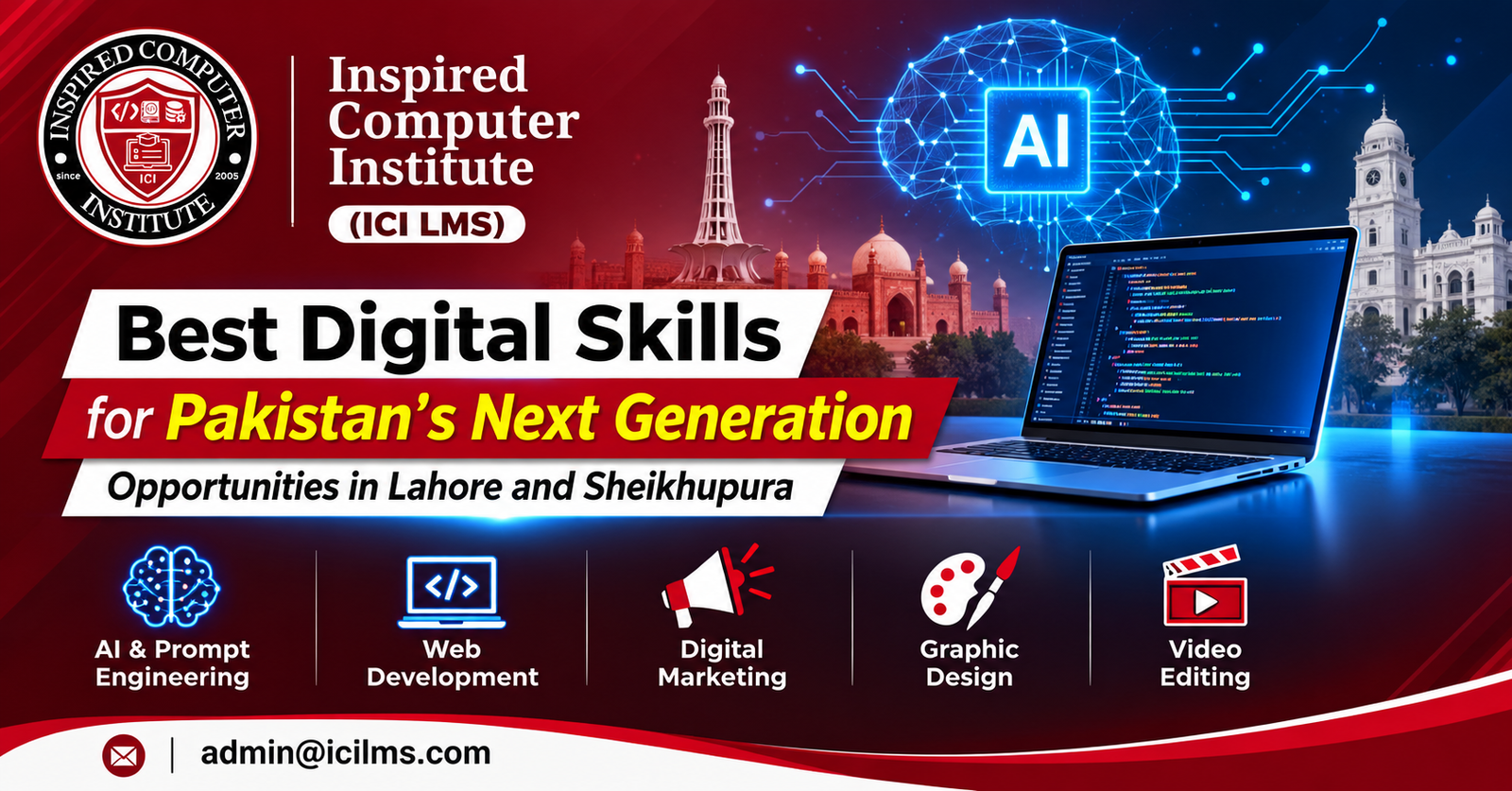
Best Digital Skills for Pakistan’s Next Generation: Opportunities in Lahore and Sheikhupura
Komal Shahzadi
- October 10, 2026
- Comment 0
Best Digital Skills for Pakistan’s Next Generation: Opportunities in Lahore and Sheikhupura
1. Introduction to Digital Skills in Pakistan
Pakistan’s next generation is growing up in a world where opportunities are no longer limited to the streets of a particular city, the offices of a large company, or the jobs advertised in a newspaper. A student sitting in Lahore can build a website for a business in another country, while a young person in Sheikhupura can edit videos for an international creator, manage an online store, or develop a career in digital marketing. The internet has changed the meaning of professional opportunity, allowing people to connect their abilities with customers, employers, and businesses far beyond their immediate surroundings. For young Pakistanis who want to build a more independent future, learning digital skills is becoming an important investment in education, employability, and entrepreneurship. A university degree can still provide valuable knowledge and credibility, but practical digital abilities can help students turn that knowledge into work that businesses actually need.
Lahore, as a major educational, commercial, and technology centre in Punjab, offers access to software companies, creative agencies, training institutes, startups, and professional networking opportunities. Sheikhupura has a different but equally interesting position, with industrial activity, local businesses, educational institutions, and links to the wider Lahore region creating potential demand for digital services. Young people in both locations can benefit from learning skills that solve real problems, such as helping a small shop attract customers online, making an industrial business easier to find on Google, or creating a professional website for a local service provider. The challenge is choosing the right skill, learning it properly, and developing enough practical experience to demonstrate genuine ability. Instead of chasing every new online trend, students should focus on building a strong foundation, completing real projects, and improving their communication and problem-solving skills alongside their technical knowledge.
The central question is not simply which digital skill is popular today. It is which skill matches your interests, available resources, career goals, and the needs of businesses around you. Some students may enjoy programming, while others have a natural eye for design, a talent for writing, or an interest in understanding how people make purchasing decisions. Each of these strengths can lead to a digital career when supported by consistent practice. This guide explores the best digital skills for Pakistan’s next generation, explains how Lahore and Sheikhupura offer different opportunities, and provides practical steps for students, job seekers, graduates, and aspiring freelancers who want to turn digital learning into a realistic career path.
2. Why Digital Skills Matter for Young Pakistanis
The traditional idea of career success often involves obtaining a qualification, applying for vacancies, and waiting for an employer to offer a position. That route remains valuable, but it is no longer the only way to earn a living or develop professional experience. Digital skills allow young people to explore employment, remote work, freelancing, entrepreneurship, and part-time projects while continuing their studies. A student who learns website development can help local businesses establish an online presence, while someone who understands search engine optimisation can help those same businesses attract visitors through search engines. These services have practical value because companies need customers, customers need information, and digital platforms help connect the two. The opportunity comes from matching a useful skill with a genuine business need rather than simply collecting certificates.
For young people in Pakistan, digital work can also create opportunities to serve international clients, although success is never automatic. Competition is strong, and clients usually care about quality, reliability, communication, deadlines, and results. A beginner who understands these expectations has a better chance of building a sustainable career than someone who completes several short courses without creating any examples of their work. Digital skills can also strengthen conventional careers. An accountant who learns spreadsheet automation, a teacher who understands online learning tools, or a salesperson who knows customer relationship management software may become more effective in their existing profession. In this sense, digital literacy is not only for people who want to become programmers or freelancers; it is becoming useful across many different industries.
Another important advantage is flexibility. Young people do not necessarily need to move immediately to a large city to begin learning, and they may be able to develop early skills using a computer, an internet connection, and affordable educational resources. However, access to suitable devices, dependable electricity, reliable internet, and a quiet learning environment can vary considerably between households. These limitations should be recognised rather than ignored. Students can respond by choosing learning methods that fit their circumstances, using free resources where possible, and setting realistic weekly goals. The most effective approach is to treat digital education as a gradual process: learn the fundamentals, practise regularly, build projects, obtain feedback, and improve. With this foundation, young Pakistanis can explore opportunities locally while preparing themselves for a wider digital economy.
2.1 The Growing Importance of Digital Literacy
Digital literacy means more than knowing how to use a smartphone or open a social media account. It includes understanding how to search for reliable information, communicate professionally online, manage files, protect personal information, use digital productivity tools, and recognise common online scams. These basic abilities make it easier to learn advanced skills because almost every digital profession requires some combination of research, organisation, communication, and technical confidence. A student who can organise project files, write a clear email, use spreadsheets, and participate in an online meeting already has a useful foundation for remote work. Employers and clients may not always mention these abilities in a job advertisement, but they often notice their absence when a worker struggles to follow instructions or manage a task independently.
For students in Lahore and Sheikhupura, digital literacy can begin with simple activities. Learn how to create professional documents, use cloud storage carefully, organise folders, research a topic using multiple trustworthy sources, and communicate clearly in English or Urdu according to the audience. Understand the importance of strong passwords, two-factor authentication, software updates, and privacy settings. When using artificial intelligence tools, verify important information instead of assuming every answer is correct. These habits help prevent mistakes and protect both personal data and professional work. They also make it easier to collaborate with classmates, teachers, employers, and clients who may use different devices or software.
Digital literacy is especially important for beginners entering online work because attractive advertisements often promise unrealistic earnings. Some fraudulent schemes ask applicants to pay registration fees, purchase expensive training packages, or complete unpaid tasks without a legitimate agreement. A digitally literate person is more likely to investigate an opportunity, check the identity of a company, understand payment terms, and avoid sharing sensitive information with unknown people. In the long run, these basic skills support almost every career path discussed in this article. Before investing heavily in an advanced course, make sure you can confidently use the digital tools that form the foundation of modern study and work.
3. Best Digital Skills to Learn in 2026
Choosing a digital skill can feel confusing when social media is full of people recommending coding, artificial intelligence, graphic design, trading, video editing, and dozens of other career options. The smartest decision is to look beyond popularity and consider the problems businesses are willing to pay someone to solve. A business may need a website, a designer may need to create a mobile application interface, an online store may need better product descriptions, or a manufacturing company may need to organise its sales data. Each problem represents a possible career opportunity for someone with the right abilities. For young Pakistanis, the best digital skills are those that combine practical demand, accessible learning resources, opportunities to demonstrate competence, and room for long-term development. The following options offer different entry points depending on whether you prefer technical work, creativity, communication, or analysis.
It is helpful to distinguish between a skill that is easy to start learning and a skill that is easy to turn into reliable income. Basic graphic design, for example, may be relatively approachable for a beginner, but standing out in a competitive market requires design judgement, consistency, and a strong portfolio. Web development may take longer to learn, but it can lead to opportunities involving websites, applications, maintenance, and software products. Digital marketing combines several abilities, including writing, audience research, analytics, and advertising strategy. Artificial intelligence offers emerging possibilities, but meaningful work usually depends on understanding the subject in which the technology is being applied. Instead of trying to master everything, choose one primary skill and one complementary skill. This approach gives you a clear direction while making your services more useful to potential employers and clients.
3.1 Web Development and Software Engineering


Web development is a valuable digital career option for students who enjoy logical thinking, solving problems, and building things that people can use. Businesses need websites to explain their services, display products, collect enquiries, accept bookings, and establish credibility. A beginner can start with HTML, CSS, and JavaScript before progressing to frameworks, databases, application programming interfaces, and server-side development. These technologies provide the foundation for creating responsive websites and interactive applications. Rather than attempting to learn every programming language at once, students should begin with a small project, such as a personal portfolio website or a simple business homepage, and gradually introduce more complex features.
In Lahore, aspiring developers can explore technology companies, software houses, digital agencies, internships, and professional communities. Sheikhupura-based learners can pursue similar opportunities through remote projects, local business websites, and connections with companies across the wider Punjab region. Small businesses may need a website that loads quickly on mobile devices, clearly displays contact information, and helps customers understand their services. A developer who can deliver these essentials reliably has a practical starting point. As experience grows, specialisation in e-commerce development, WordPress, front-end development, back-end systems, or mobile applications can create more focused career opportunities.
A sensible learning plan is to spend the first few weeks understanding the fundamentals, then build two or three complete projects that demonstrate your ability to solve real problems. Learn how to use version control, test websites on different screen sizes, improve loading performance, and identify basic security issues. Do not rely exclusively on copied tutorials. Following a tutorial can teach you how a feature works, but adapting it to a different problem demonstrates whether you truly understand it. When you begin approaching clients, explain what your website will help them achieve rather than simply listing programming languages. A business owner is usually more interested in a site that generates enquiries and makes the company look professional than in the technical details behind the code.
3.2 Graphic Design and UI/UX Design


Graphic design is an attractive starting point for students who enjoy visual communication, colour, typography, photography, and creative problem-solving. Businesses use graphics for advertisements, packaging, brochures, social media posts, presentations, and brand identities. A designer can learn the basics using accessible tools before progressing to more specialised software. However, learning how to operate a design application is only one part of becoming a professional. Good design requires understanding the intended audience, selecting appropriate visual elements, arranging information clearly, and making sure the final result communicates the right message. A beautiful design that confuses customers or hides important information has missed its purpose.
UI/UX design takes this work further by focusing on how people interact with websites, mobile applications, and digital products. UI, or user interface design, concerns the visual elements users interact with, while UX, or user experience, focuses on how effectively and comfortably people complete their tasks. A UI/UX designer may create wireframes, research user needs, develop prototypes, and test whether a digital product is easy to understand. These abilities can be useful to software companies, startups, agencies, and organisations improving their existing digital services. Students in Lahore may find opportunities to connect with design communities and technology businesses, while learners in Sheikhupura can build their portfolios independently and seek remote collaboration.
To get started, create a fictional brand for a local bakery, clothing shop, educational institute, or industrial supplier. Design its logo, social media templates, promotional material, and a simple website interface. Explain why you chose particular colours, layouts, and typography. This turns a collection of images into a portfolio that demonstrates your thinking. When you have enough experience, contact local businesses with specific suggestions rather than sending generic messages asking for work. For example, you might show how a restaurant could improve the readability of its menu or how a clothing store could create consistent product graphics. Keep your work original, respect licensing rules, and use AI-generated assets carefully. A strong designer uses tools to support creative judgement rather than expecting software to make every decision.
3.3 Digital Marketing and SEO
Digital marketing helps businesses reach potential customers through online channels. It includes search engine optimisation (SEO), social media marketing, email campaigns, paid advertising, content strategy, and performance measurement. This field can be especially relevant to Lahore and Sheikhupura because businesses in almost every sector need to communicate with customers. A school may want more admissions enquiries, a clothing brand may want more online sales, and an industrial supplier may want to reach buyers searching for specialised products. A digital marketer studies the target audience, chooses suitable channels, creates useful content, and evaluates whether the work is producing meaningful results.
Search engine optimisation is particularly valuable for businesses that want to appear when people search for relevant products or services. SEO involves understanding search intent, researching keywords, improving website structure, creating helpful content, strengthening internal links, and making pages easier for search engines and users to understand. A learner might research phrases such as “computer courses in Sheikhupura” or “industrial packaging supplier in Lahore” to understand what local audiences are searching for. The actual opportunity depends on search demand, competition, the quality of the business, and its ability to serve customers. No responsible SEO professional can guarantee a first-place ranking because search results depend on many factors outside one person’s control.
Beginners can practise by creating a small website or improving the content of a project they own. Learn how to write useful page titles, organise headings, research audience questions, improve image descriptions, and measure website performance. Google Search Console and Google Analytics can help learners understand search visibility and website activity when correctly configured. For paid campaigns, study budgeting, audience targeting, landing pages, conversion tracking, and the difference between clicks and actual business outcomes. A campaign that generates hundreds of clicks but no customers may not be successful. By understanding the connection between marketing activity and commercial results, students can offer more useful services and gradually develop specialisations in local SEO, e-commerce marketing, or content strategy.
3.4 Artificial Intelligence and Data Analytics
Artificial intelligence is changing how people perform research, write drafts, analyse information, automate routine tasks, and develop software. For Pakistan’s next generation, learning to work effectively with AI tools can improve productivity across many careers. However, the strongest opportunity is not simply knowing how to write prompts. It is understanding a real problem and using the appropriate technology to solve it accurately, efficiently, and responsibly. A marketing student might use AI to organise customer feedback, while a developer might use it to assist with debugging and a business analyst might use it to summarise large datasets. In each case, human judgement remains important because AI-generated results can contain mistakes, omissions, or misleading claims.
Data analytics is a related field that focuses on turning information into useful decisions. Learners can begin with spreadsheets, charts, descriptive statistics, and data cleaning before moving to SQL, Python, dashboards, and more advanced analytical techniques. Businesses collect information about sales, inventory, customer enquiries, website traffic, and operating costs, but raw data is not automatically useful. An analyst helps identify patterns, compare performance, and explain what the numbers mean. A student could create a sample dashboard showing monthly sales, best-selling products, and changes in customer demand. This type of project demonstrates practical ability more convincingly than a list of software tools on a CV.
Lahore’s technology and business environment offers potential opportunities for people interested in analytics, automation, and AI-assisted workflows. Sheikhupura’s commercial and industrial activities also suggest practical areas where data skills may be useful, including inventory management, sales reporting, production planning, and customer records. These are potential applications, not guarantees of available vacancies. Start by learning spreadsheet formulas, pivot tables, data visualisation, and basic statistical reasoning. Then explore SQL or Python according to your goals. When using AI tools, never upload confidential customer records or sensitive company information without proper authorisation. The ability to protect data, verify results, document assumptions, and explain findings clearly is just as important as knowing which tool to use.
3.5 Video Editing and Content Creation
Video has become a major format for education, entertainment, product demonstrations, advertising, and social media communication. This creates opportunities for people who can edit footage, improve audio, add captions, create engaging introductions, and adapt content to different platforms. A beginner does not need to start with expensive equipment or a professional studio. A suitable computer, basic editing software, and original practice footage can provide enough material to learn the fundamentals. The important skills include pacing, storytelling, sound quality, colour correction, visual continuity, and understanding why viewers might continue watching or leave a video.
Young people in Lahore and Sheikhupura can practise by producing short educational videos, product demonstrations, interviews, or promotional clips for fictional businesses. A local clothing retailer might need product videos, while a training institute could benefit from short lessons that explain its courses. A creator who consistently delivers well-edited videos, follows instructions, and meets deadlines can become useful to businesses that do not have an in-house editing team. As experience develops, specialisation in short-form content, YouTube editing, motion graphics, educational content, or advertising videos can help distinguish one editor from another.
Content creation also involves responsibilities that are easy to overlook. Music, photographs, video clips, and fonts may be protected by copyright, so creators should use original material or assets licensed for the intended purpose. They should also obtain appropriate permission before publishing identifiable people or private information. A strong portfolio should show different editing styles while demonstrating that the creator understands the purpose of each video. Instead of filling every second with transitions and effects, focus on clarity, rhythm, sound, and storytelling. These fundamentals often make the difference between an attractive beginner project and a professional piece of communication.
3.6 Freelancing, E-Commerce, and Virtual Assistance
Freelancing is a way of delivering services to clients without necessarily working as a permanent employee for one organisation. It is not a single technical skill; it is a working model that depends on the service being offered. A freelancer might develop websites, design advertisements, write product descriptions, manage social media accounts, or analyse data. Success requires more than finding a platform and creating a profile. Freelancers need to understand client requirements, estimate the work involved, communicate clearly, manage deadlines, agree on payment terms, and handle revisions professionally. Newcomers should expect a learning period rather than assuming that a profile will generate immediate income.
E-commerce offers another route for digitally minded young people. They can learn how online stores operate, how product listings are prepared, how orders are processed, and how customer enquiries are managed. Pakistan’s local businesses may benefit from improving their digital catalogues or expanding their ability to communicate with customers online. Virtual assistance is also worth exploring for people who are organised and comfortable with administrative tasks. Typical responsibilities can include scheduling, inbox management, spreadsheet updates, customer support, research, and maintaining business records. These services may be more approachable for some beginners than advanced programming, although clients still expect accuracy, discretion, and dependable communication.
Students should choose a clear service before trying to become general-purpose online workers. For example, “I create product listings for small online shops” is more specific than “I can do any online work.” A clear offer helps prospective clients understand what they are buying and gives the freelancer a practical direction for learning. Start with sample projects, establish a realistic workflow, and learn the relevant platform’s rules before accepting paid work. Never assume that all online marketplaces allow the same payment methods or charge identical fees; verify current terms and eligibility directly. By combining one specialised service with sound communication and business habits, young Pakistanis can gradually build experience without treating freelancing as a guaranteed shortcut to wealth.
4. Digital Career Opportunities in Lahore

Students can improve their chances by using the city as a place to learn, network, and gain experience. Attend relevant workshops when affordable, connect with professionals respectfully, explore internship opportunities, and ask employers what skills they expect from entry-level applicants. Universities and training institutes may provide useful access to mentors, computers, project teams, or career guidance, although the quality and cost of programmes differ. Learners should assess course syllabuses, instructor experience, practical assignments, and graduate outcomes before paying for training. A course certificate can help document learning, but it should support a portfolio rather than replace one.
Another advantage is the opportunity to practise with real business problems. Lahore has restaurants, clinics, educational institutes, retail outlets, property businesses, manufacturers, and service providers that may need better websites, clearer advertising, or more organised digital processes. Students should approach such businesses professionally and avoid promising outcomes they cannot guarantee. A small, well-defined project can teach requirements gathering, feedback management, and delivery standards. Even if the first project is a demonstration rather than a paid contract, the experience can improve future applications. The goal is to use the city’s business environment as a practical classroom where technical knowledge becomes demonstrable professional ability.
5. Digital Career Opportunities in Sheikhupura
Sheikhupura offers a different perspective on digital careers because students can connect technology skills with local commerce, education, services, and industrial activity. A digital career does not always require working for a technology company. Local retailers may need product photography and online catalogues, educational institutes may need better communication with prospective students, and service providers may want websites that make enquiries easier. Businesses involved in manufacturing or distribution may also benefit from digital recordkeeping, product documentation, customer databases, and more organised sales reporting. These examples represent possible needs to investigate, not evidence that every business is currently hiring or willing to outsource such work.
For students who cannot travel to Lahore regularly, local projects can provide a practical starting point. A learner could build a sample website for a fictional business, create a digital catalogue for a family enterprise with permission, or prepare a demonstration dashboard using invented sales data. If approaching a real business, first ask about its needs rather than assuming that it requires a particular service. A shop owner might need better product photographs rather than a complicated website, while a training centre may care more about accurate course information and a reliable enquiry process. Listening carefully helps young professionals recommend affordable solutions that match the client’s actual circumstances.
Sheikhupura-based learners can also pursue online education and remote opportunities, provided they have access to suitable equipment and a reliable connection. Remote work expands the range of potential clients, but it also introduces competition and requires independent organisation. Students should build a portfolio, improve their professional communication, practise explaining their work, and apply to legitimate internships or entry-level vacancies. Local business relationships can complement this process by providing feedback, referrals, and examples of real-world problem-solving. The strongest approach is not to assume that success requires leaving Sheikhupura immediately, nor to limit ambitions to the local market. Instead, combine local understanding with skills that can be demonstrated to employers and clients anywhere.
6. How Students Can Learn Digital Skills on a Budget
A limited budget should encourage careful planning, not discourage learning. Many beginners can start with free tutorials, documentation, open-source tools, public learning resources, and small practice projects. The first step is to choose one skill and identify the minimum equipment needed to learn it properly. A smartphone may be enough for certain social media tasks or basic content planning, but programming, professional design, and data analysis are generally easier with access to a suitable computer. If purchasing a laptop is not currently possible, learners can investigate school or university computer labs, community facilities, shared devices, or other legitimate access options. It is better to build a realistic learning routine with available resources than to delay indefinitely while waiting for perfect equipment.
A simple 12-week learning plan can provide structure. During the first four weeks, focus on the fundamentals and practise a little each day. During the next four weeks, complete guided exercises and begin a small project without following instructions word for word. During the final four weeks, build two portfolio examples, request feedback, and revise your work. The timeline can be adjusted according to the difficulty of the skill and your existing responsibilities. Programming and advanced analytics may require substantially longer before you are ready for professional projects, while basic administrative or design tasks may allow earlier practice. The purpose of the plan is to make progress measurable rather than to promise employment after a fixed number of days.
Students should also compare paid courses carefully. Before enrolling, check the curriculum, practical assignments, instructor credentials, refund policies, and whether the course teaches current tools. Be cautious of programmes that promise guaranteed income, instant freelancing success, or unrealistic earnings without evidence. Free learning materials can be excellent, but they still require discipline and careful selection. Create a weekly schedule, track completed tasks, and publish suitable work in a portfolio when it is safe to do so. Most importantly, measure progress by what you can build, explain, improve, and deliver—not by how many videos you have watched.
7. Building a Portfolio and Finding Your First Client
A portfolio is one of the clearest ways for a beginner to show what they can actually do. It does not need to contain dozens of projects or have an expensive website. Three carefully selected examples can demonstrate more ability than twenty unfinished exercises. A web developer might showcase a responsive business website, a product catalogue, and a simple interactive application. A designer could present a brand identity, a social media campaign, and a mobile interface prototype. A digital marketer might create a keyword research example, an SEO audit of a permitted public website, and a sample content plan. Each project should explain the problem, the approach, the tools used, and the final result.
When creating portfolio work for fictional businesses, label it clearly as a concept project. Never claim that a real company was your client if it was not. If you have completed genuine work, ask permission before publishing confidential details, private data, or unpublished designs. A professional portfolio should be easy to navigate, free of spelling mistakes, and focused on the services you want to offer. It should also include a brief introduction and a straightforward way to contact you. For many beginners, the quality and relevance of the examples matter more than elaborate branding or expensive website hosting.
Finding the first client can be challenging because businesses naturally prefer someone they trust. Start with a focused offer, identify organisations that could genuinely benefit, and explain how your service addresses a specific problem. For example, a designer could suggest improving the consistency of a business’s social media graphics, while a developer could point out that a mobile website makes contact details difficult to find. Keep the initial message respectful and concise. Do not send spam, exaggerate your expertise, or promise guaranteed sales. Agree on the scope, deadline, revision limits, and payment arrangements before beginning substantial work. As projects are completed, ask satisfied clients for honest testimonials and permission to use the work as a case study. Reliability and clear communication can become powerful advantages in a competitive market.
8. Challenges and Future Trends in Pakistan’s Digital Economy
The digital economy offers genuine opportunities, but it also comes with challenges that young learners should understand before investing time and money. Competition is high in many entry-level services, and basic tasks can become less valuable when many people offer similar work. Some clients have unrealistic budgets, while others may delay payment or change requirements after a project begins. Internet interruptions, power shortages, limited access to suitable equipment, and language barriers can make learning or remote work more difficult for some students. These obstacles do not make digital careers impossible, but they do mean that planning, persistence, and careful client selection matter.
Artificial intelligence is likely to continue changing how digital professionals work. Routine tasks such as generating initial drafts, organising information, and producing simple design variations may become faster, but speed alone does not guarantee quality. Professionals will still need to understand customers, check accuracy, exercise judgement, and adapt their work to specific requirements. Students who combine technical competence with communication, critical thinking, creativity, and domain knowledge may be better prepared to adjust as tools evolve. For example, a digital marketer who understands customer behaviour and analytics can make more informed decisions than someone who only knows how to generate social media captions with AI.
Cybersecurity and privacy will also remain important as more businesses use digital systems. Beginners should understand safe account management, phishing risks, secure file sharing, and the responsible handling of customer information. They should avoid sharing passwords, confidential files, or personal data with unauthorised people and services. Financial awareness matters too: freelancers should account for platform charges, currency conversion, taxes where applicable, and irregular income. Keep records of projects and payments, verify platform rules, and seek qualified advice when legal or tax questions arise. A sustainable digital career is built through continuous learning and responsible business practices, not just technical ability. The future will favour people who can learn new tools while remaining dependable, thoughtful, and focused on solving real problems.
Conclusion: Building a Digital Future for Pakistan’s Next Generation
The best digital skills for Pakistan’s next generation are not limited to one profession or one technology. Web development, graphic design, digital marketing, SEO, artificial intelligence, data analytics, video editing, e-commerce, and virtual assistance each offer different ways to build practical experience and explore career opportunities. The right choice depends on your interests, learning resources, financial circumstances, and the type of work you want to do. Students who enjoy solving technical problems may find programming rewarding, while those who prefer creative communication may be more comfortable with design or content creation. The key is to select a direction, practise consistently, and develop a portfolio that demonstrates genuine ability.
For young people in Lahore, the city’s educational institutions, businesses, and technology ecosystem provide opportunities to explore internships, professional networks, and potential employers. For students in Sheikhupura, local businesses, industrial activity, online learning, and remote collaboration provide different starting points. Neither location guarantees success, but both can support a practical learning journey when students actively look for opportunities to apply their knowledge. You do not need to master every technology or spend a fortune on training before beginning. Start with the resources you can access, learn the fundamentals, complete small projects, and gradually increase the difficulty of your work.
Most importantly, treat digital skills as a long-term investment rather than a promise of instant earnings. Certificates can support your learning, but practical projects, professional behaviour, and the ability to solve problems are what help turn knowledge into valuable work. Keep improving your communication, protect your online security, verify information, and learn to use emerging AI tools responsibly. Whether you want a job in Lahore, a business serving customers in Sheikhupura, or a remote career with international clients, the first step is the same: choose one useful skill and begin practising today. Pakistan’s next generation can participate more effectively in the digital economy by combining technical knowledge with creativity, discipline, and a willingness to keep learning.
Frequently Asked Questions (20 FAQs)
1. Which digital skill is best for students in Pakistan?
Web development, graphic design, digital marketing, SEO, video editing, and data analytics are all useful options. The best choice depends on your interests, access to equipment, and career goals. Start with one skill and build practical projects before moving to advanced topics.
2. Which digital skill is best for beginners in Lahore and Sheikhupura?
Graphic design, basic WordPress development, social media management, and video editing can provide approachable starting points. However, beginners should compare the learning requirements and competition in each field. Choose something you enjoy practising consistently.
3. Can students in Sheikhupura learn digital skills from home?
Yes. Students can use online tutorials, documentation, virtual classes, and practice projects to learn many digital skills from home. A suitable device, dependable internet access, and a consistent schedule will make the process easier.
4. Is web development a good career in Pakistan?
Web development can be a promising career for people who enjoy programming and problem-solving. Opportunities may include employment, freelance projects, website maintenance, and software development. Success depends on practical ability, continued learning, and the demand for your particular skills.
5. Is graphic design still worth learning in 2026?
Yes. Businesses continue to need branding, marketing graphics, product visuals, and digital interfaces. Because AI tools and design templates have increased competition, beginners should focus on visual communication, originality, brand consistency, and problem-solving rather than software operation alone.
6. Can I learn digital marketing without a university degree?
Yes. You can learn digital marketing through online courses, practical exercises, and independent projects. Understanding audience research, SEO, content strategy, analytics, and advertising is important. Some employers may still require specific qualifications for particular positions.
7. What is SEO, and why is it useful for Pakistani businesses?
SEO stands for search engine optimisation. It involves improving a website so that relevant pages can be discovered through search engines. Pakistani businesses can use SEO to reach potential customers searching for their products, services, and local information.
8. How long does it take to learn a digital skill?
Basic familiarity may take a few weeks, while developing professional competence often takes several months or longer. The timeline depends on the skill, your starting knowledge, and the time you spend practising. Focus on demonstrated ability rather than an arbitrary deadline.
9. Can I start freelancing without experience?
Yes, but finding the first client can be difficult. Begin by creating sample projects, preparing a focused portfolio, and offering a clearly defined service. Be honest about your experience and take on work that matches your current abilities.
10. Which digital skills are useful for remote jobs?
Web development, software testing, data analytics, digital marketing, graphic design, customer support, and virtual assistance can all support remote work. Employers generally expect reliable communication, suitable technical knowledge, and the ability to work independently.
11. Is freelancing a reliable source of income for beginners?
Freelancing can become a source of income, but earnings are not guaranteed and may fluctuate considerably. Beginners need time to develop skills, build trust, find clients, and manage projects. Maintaining realistic expectations and tracking expenses can help reduce financial risk.
12. Can I learn digital skills using only a mobile phone?
A smartphone is useful for learning, research, content planning, social media management, and some basic editing tasks. However, programming, advanced design, and data analysis are usually easier on a computer. Access to a suitable laptop can expand your learning options.
13. What is the best free way to learn digital skills in Pakistan?
Start with official documentation, free tutorials, reputable educational platforms, and practical exercises. Build projects as you learn and seek feedback from experienced people. Before paying for a course, check whether free resources already cover your learning goals.
14. Is artificial intelligence a good career option for young Pakistanis?
AI can offer opportunities in automation, software development, data analysis, machine learning, and AI-assisted business processes. Advanced roles usually require stronger foundations in programming, mathematics, statistics, or a relevant subject. Learning to use AI tools responsibly is a useful starting point.
15. What digital skills are useful for small businesses in Sheikhupura?
Local businesses may benefit from website development, local SEO, social media marketing, product photography, online catalogues, and spreadsheet management. The best service depends on each business’s customers, budget, and operational needs.
16. Are digital skills useful for students who study arts or commerce?
Absolutely. Arts students can explore graphic design, content creation, digital marketing, and UI/UX design. Commerce students may find e-commerce, bookkeeping software, spreadsheet analysis, and business intelligence particularly relevant. Digital skills can complement almost any academic background.
17. Do I need an expensive laptop to begin learning?
Not necessarily. Many learners can start with an existing computer or access shared facilities where available. The required specifications depend on the chosen skill. Video editing and advanced development may require more capable hardware than basic writing or administrative work.
18. How can I get my first digital job in Lahore?
Prepare a relevant CV, create a portfolio, identify suitable entry-level vacancies, and apply for internships and junior roles. Practise explaining your projects and technical decisions. Networking with professionals and checking employers’ official career pages can also help you discover opportunities.
19. How can I avoid online freelancing scams in Pakistan?
Be cautious of guaranteed-income promises, suspicious registration fees, requests for sensitive information, and pressure to perform extensive unpaid work. Verify the client or platform, agree on project terms, and use secure payment arrangements. Review current platform rules before accepting an assignment.
20. What is the future of digital skills in Pakistan?
Digital skills are likely to remain relevant as businesses adopt online services, automation, analytics, and AI tools. Specific jobs and technologies will change, so continuous learning will be essential. Young people who combine practical expertise, communication, adaptability, and responsible technology use can prepare for a wider range of opportunities.